The press watches everything you do. As you rise through politics, media attention intensifies from local newspaper mentions to constant national scrutiny. Managing the media is a core skill of political survival.
¶ The UK Media Landscape
UK Politics Simulator models the British media ecosystem in detail:
- 30+ national outlets: Newspapers, broadcasters, and digital publications, each with distinct voice and political lean
- 30+ regional outlets: Covering regional issues
- 900+ local outlets: Real-life newspapers, radio stations, and hyperlocal blogs for every council area
Each outlet has its own editorial stance, ownership model, audience, and institutional memory. The Guardian writes differently from the Telegraph. The BBC operates under different constraints from the tabloids. Your local paper cares about different things than the national press.
¶ How Coverage Works
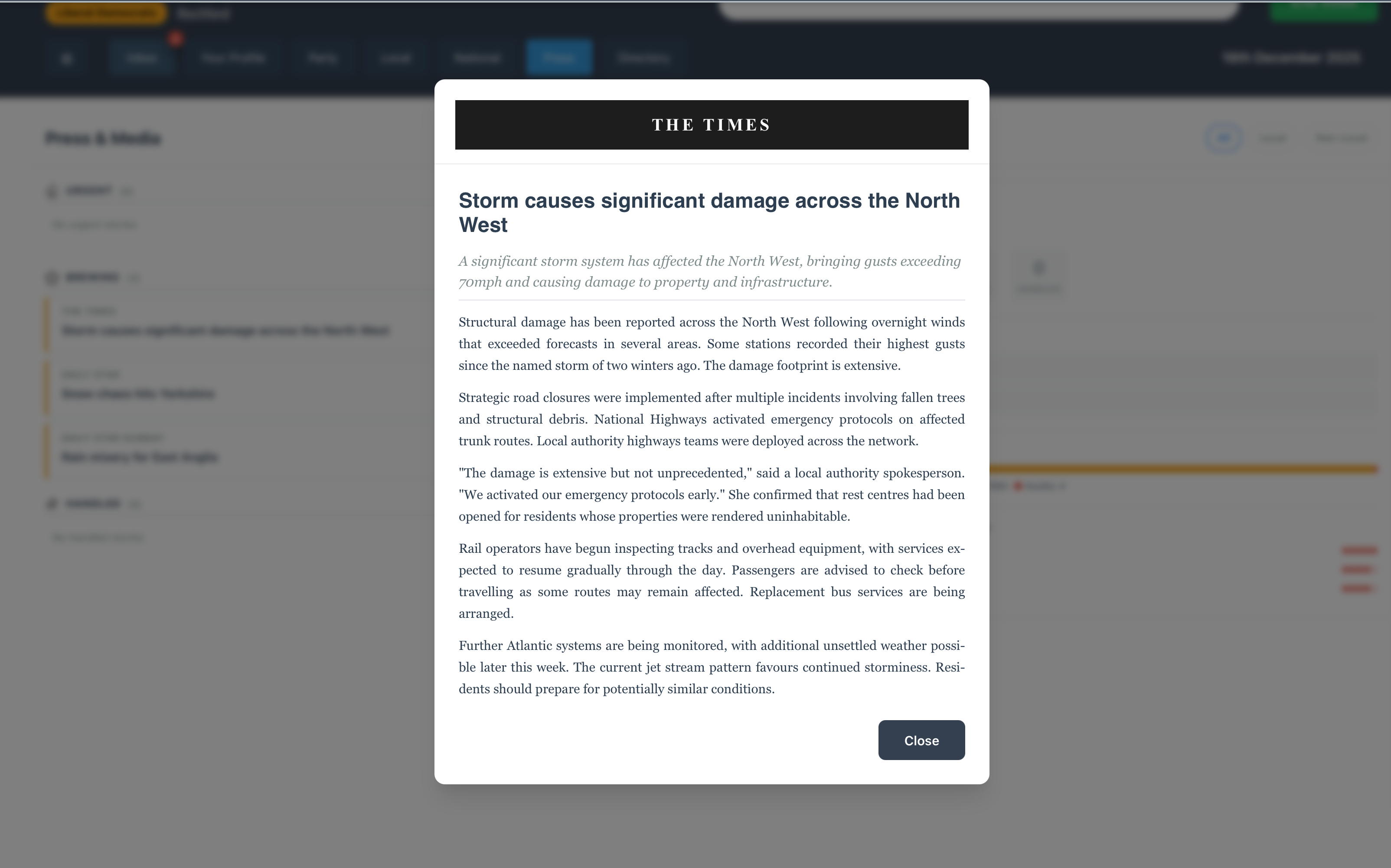
Stories are generated based on what's actually happening in the game: your votes, statements, scandals, and successes. The press covers what you give it.
Every story has a newsworthiness score based on your profile, the significance of the event, and how busy the news week is. Bigger stories get more coverage. During quiet weeks, smaller stories get more attention.
Stories have lifecycles. A scandal sparks, expands as outlets pick it up, peaks when attention is highest, then resolves as focus moves elsewhere. Some stories die quickly. Others run for weeks.
¶ Outlet Hostility and Sentiment
Outlets aren't neutral observers. Each has a baseline hostility toward you based on editorial stance and political alignment:
- A Labour left politician faces high baseline hostility from right-leaning papers
- A Conservative faces scepticism from left-leaning outlets
- Centrists face less structural hostility but also less passionate support
On top of this baseline, sentiment tracks how outlets are actually covering you right now. Good weeks improve sentiment. Scandals tank it. Even hostile papers can run grudgingly positive coverage if you give them no choice. Even friendly papers turn critical during scandals.
¶ Journalists
Journalists are individual NPCs with relationships, memories, and career ambitions. Your relationship with specific journalists affects how they cover you.
Different journalists have different:
- Specialisms: Local government, Westminster, specific policy areas
- Styles: Investigative, access-focused, confrontational, analytical
- Career stages: Local reporter, regional correspondent, national political editor
The lobby correspondent who covers Parliament is a different relationship than your constituency's local paper reporter.
¶ Responding to Coverage
When stories break, you can respond:
Right of reply: When a journalist is writing an aricle that impacts you, you may get a chance to comment before publication. What you say shapes the final story.
Proactive contact: You can reach out to journalists to build relationships and provide context. This works better with journalists who already trust you.
What actions you can take depends on your career stage. Aspiring politicians have almost no media tools. Ministers have full press operations.
¶ Institutional Memory
Outlets remember:
- Past controversies and broken promises
- Your media performances (good and catastrophic)
- Access you've granted or denied
- Exclusives you've given to their competitors
This memory affects future coverage. Freeze out a newspaper and they remember. Give them scoops and they're more receptive next time.
For specific questions about media mechanics, see FAQs.